

Research
Explore the research network →
Institutional Dynamics
How do institutions persist, and how do they change? This stream examines the role of language, rhetoric, and argumentation in maintaining and transforming taken-for-granted beliefs, with a focus on how strategic communication shapes institutional stability and change.
Organization Studies
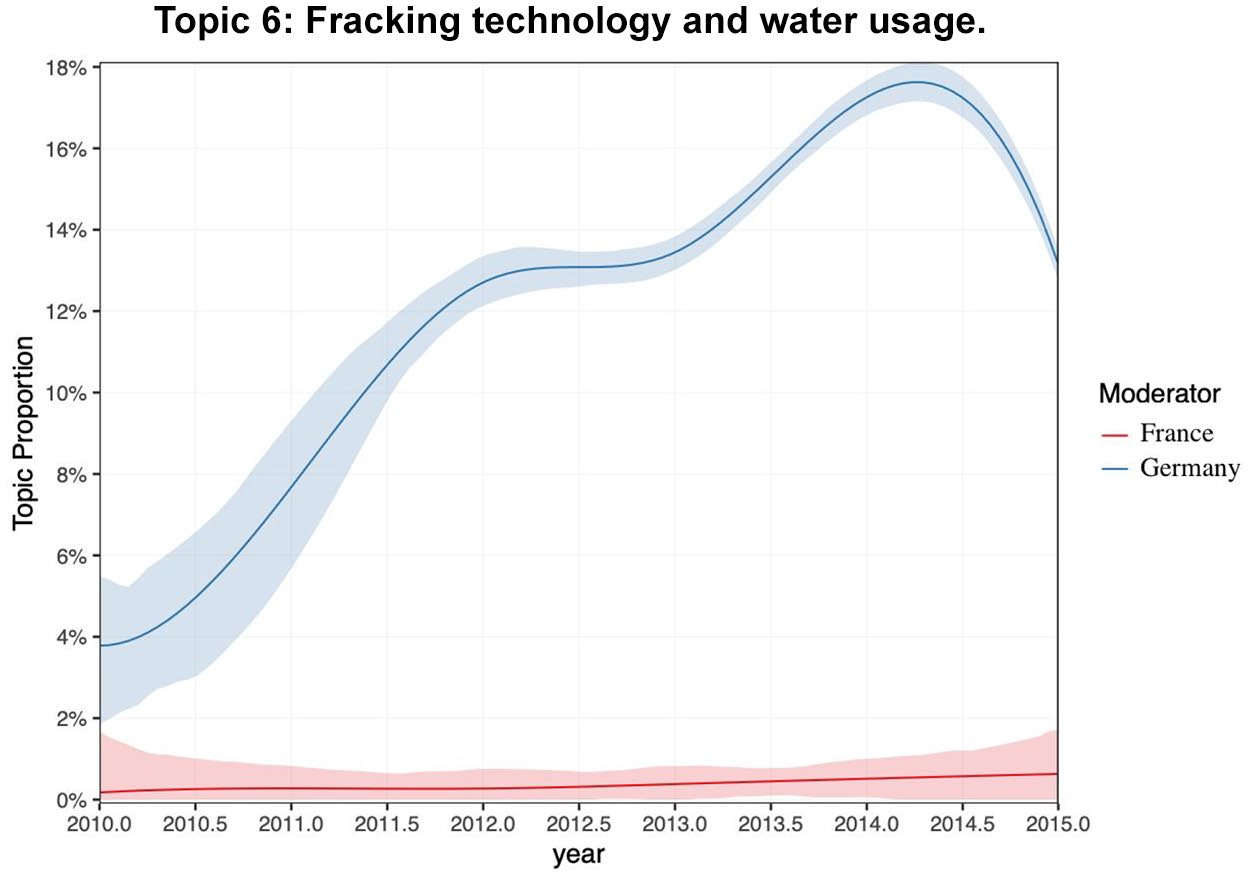
How Historical Context Shapes Field-level Frames: A Comparative Study of France and Germany’s Shale Gas Debates
This study uses structural topic modelling to analyze over 25,000 newspaper articles on shale gas debates in France and Germany between 2006 and 2015, supplemented with 78 interviews, to compare how two countries with radically different energy histories framed the same issue.
Key Findings
- France framed shale gas as inherently in conflict with their energy strategy, while Germany framed it as an opportunity aligned with their energy mix
- Three mechanisms link historical context to frame construction: historical positioning, issue labelling, and bounded mobilization
- A country’s decades-old understanding of energy production fundamentally shapes how new issues are framed in public discourse
Abstract
This study investigates the shale gas debates in France and Germany, providing a comparative lens on how historical context shapes the construction of field-level frames. Leveraging a structural topic modelling approach, our analysis of over 25,000 newspaper articles reveals that France and Germany’s field-level frames were influenced by unique historical contexts that reflect longstanding differences in their countries’ energy production. While France framed shale gas as inherently in conflict with their energy strategy, Germany framed it as an opportunity aligned with their energy mix.
Academy of Management Journal
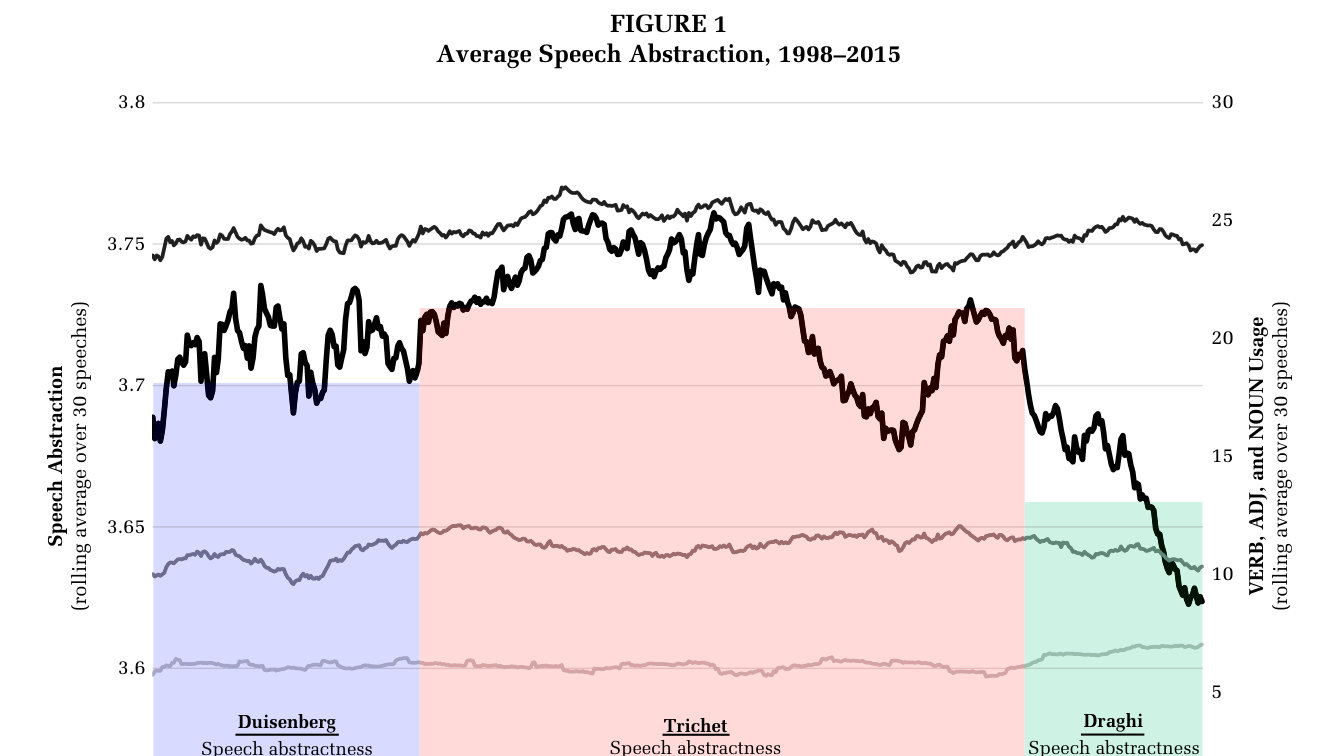
Divergent Market Reactions to Abstract Language: A Multicountry Event Study of European Central Bank Communications
This study uses computational text analysis and a multicountry event study to examine how the stock markets in 11 eurozone countries react to the abstract language in public speeches delivered by the European Central Bank president.
Key Findings
- Abstract language produces divergent market reactions across core and peripheral eurozone countries—the same speech moves markets in opposite directions
- Core countries react favorably to abstract communication, while peripheral countries prefer concrete language
- This divergent reaction intensifies when the economic interests of core and peripheral countries are made more salient
Abstract
Prominent leaders regularly communicate with multiple markets around the world, but we know little about the challenges that can arise when trying to effectively convey one’s message in a global setting. In this paper, we develop a theory about how language abstraction—a dominant strategy used to create common ground among diverse audiences—can become problematic when used in a global environment where market actors have divergent interests. Employing a multicountry event study, we analyze how the stock markets in 11 eurozone countries react to the abstract language in public speeches delivered by the European Central Bank president. We find that abstract language, rather than creating common ground, produces divergent market reactions across core and peripheral countries, such that market actors in core countries react more favorably to abstract communication, while those in peripheral countries prefer concrete communication. We also show that this divergent reaction is stronger when the economic interests of the core and the periphery are made more salient.
Administrative Science Quarterly
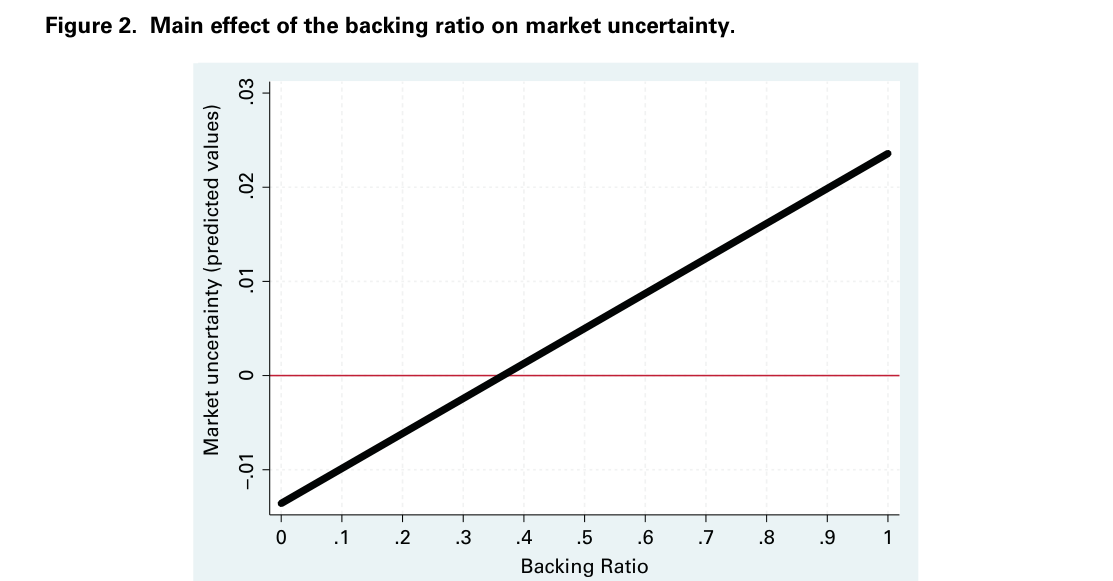
When the Fed Speaks: Arguments, Emotions, and the Microfoundations of Institutions
This study uses computational text analysis of every public speech made by the chair of the United States Federal Reserve from 1998 to 2014, combined with high-frequency financial market data, to test what happens when a prominent institutional leader explicitly reaffirms taken-for-granted assumptions.
Key Findings
- Reaffirming the foundational assumptions of monetary policy paradoxically creates market uncertainty rather than stability
- Speeches conveyed in a more positive tone suppress this destabilizing effect, while fear in the business media amplifies it
- During the financial crisis, when taken-for-grantedness weakened, reaffirming assumptions no longer created uncertainty to the same extent
Abstract
This study investigates what happens when a prominent leader explicitly reaffirms the taken-for-granted assumptions underlying an institution. While such efforts are usually made to reinforce the institution, I theorize that they actually destabilize the institution and create collective uncertainty by reopening the very considerations that people take for granted. Using speeches made by the chair of the United States Federal Reserve from 1998 to 2014, I demonstrate that reaffirming the taken-for-granted assumptions underlying the monetary policy framework creates uncertainty in the broader financial market. This market reaction is also influenced by emotions present at the time of the speech that shape how the event is interpreted. Speeches conveyed in an overall more positive tone suppress this reaction, while more fear in the business media amplifies it.
Academy of Management Review
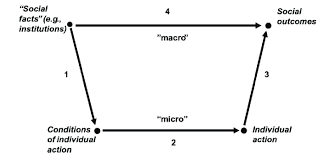
Microfoundations of Institutions: A Matter of Structure vs. Agency or Level of Analysis?
This commentary responds to Cardinale’s (2018) call for a new microfoundational approach to institutions by arguing that the real challenge lies not in reconciling structure and agency, but in specifying the level of analysis at which institutional processes operate.
Key Insights
- The central challenge for microfoundational research on institutions is specifying the level of analysis, not resolving the structure–agency divide
- Greater attention to levels of analysis can help scholars more precisely identify the mechanisms through which institutions are created, maintained, and disrupted
Abstract
In a recent paper, Cardinale (2018) proposes a new approach to the microfoundations of institutions that aims to move beyond the structure–agency divide. In this commentary, we argue that while his effort is laudable, the key challenge for microfoundational research on institutions is not resolving the structure–agency problem but rather specifying the level of analysis at which institutional phenomena are theorized and studied. We suggest that greater attention to the level-of-analysis issue can help institutional scholars more precisely identify the mechanisms through which institutions are created, maintained, and disrupted.
Academy of Management Review
A Model of Rhetorical Legitimation: The Structure of Communication and Cognition Underlying Institutional Maintenance and Change
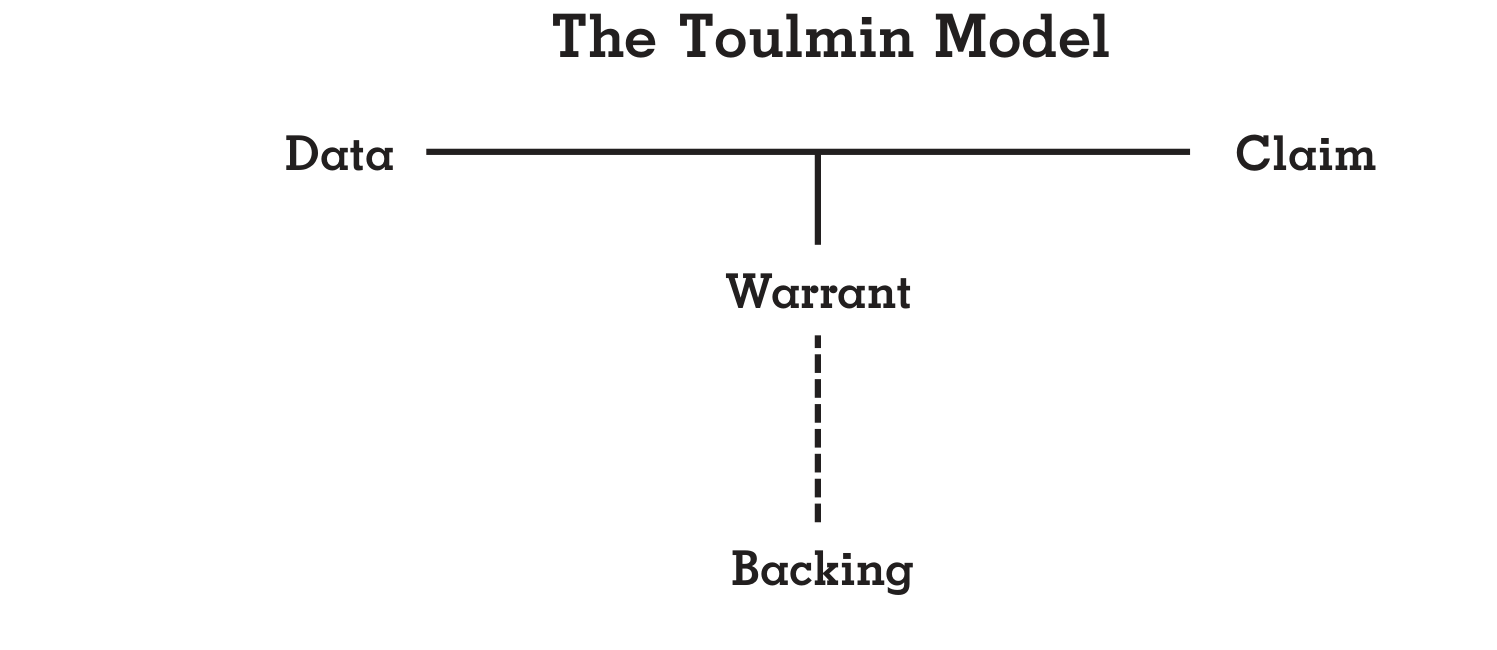
This paper draws on Toulmin’s (1958) model of argumentation to develop a theory of rhetorical legitimation, distinguishing between two structurally distinct forms of rhetoric—intrafield and interfield—and mapping how they relate to the maintenance and change of institutions.
Key Insights
- Intrafield rhetoric shapes assumptions about the legitimacy of actions within a given institutional context, while interfield rhetoric shapes assumptions about the legitimacy of the context itself
- Intrafield rhetoric relates more to institutional maintenance, whereas interfield rhetoric relates more to institutional change
- The structure of communication—not just its content—maps onto the taken-for-granted cognitive structure of institutions
Abstract
We develop a model of rhetorical legitimation that specifies the communicative and cognitive structure underlying the maintenance and change of institutions. To do so we draw on Toulmin (1958) and his idea that social actors can use two structurally distinct forms of rhetoric: intrafield rhetoric and interfield rhetoric. We use this distinction to develop and advance novel arguments about the role of rhetoric in legitimation processes. Specifically, we theorize how the use of intrafield and interfield rhetoric shapes and reflects social actors’ assumptions of legitimacy at two different levels. We then theorize how the use of intrafield rhetoric relates more to institutional maintenance, whereas the use of interfield rhetoric relates more to institutional change.
Research in the Sociology of Organizations
Arguments and Institutions
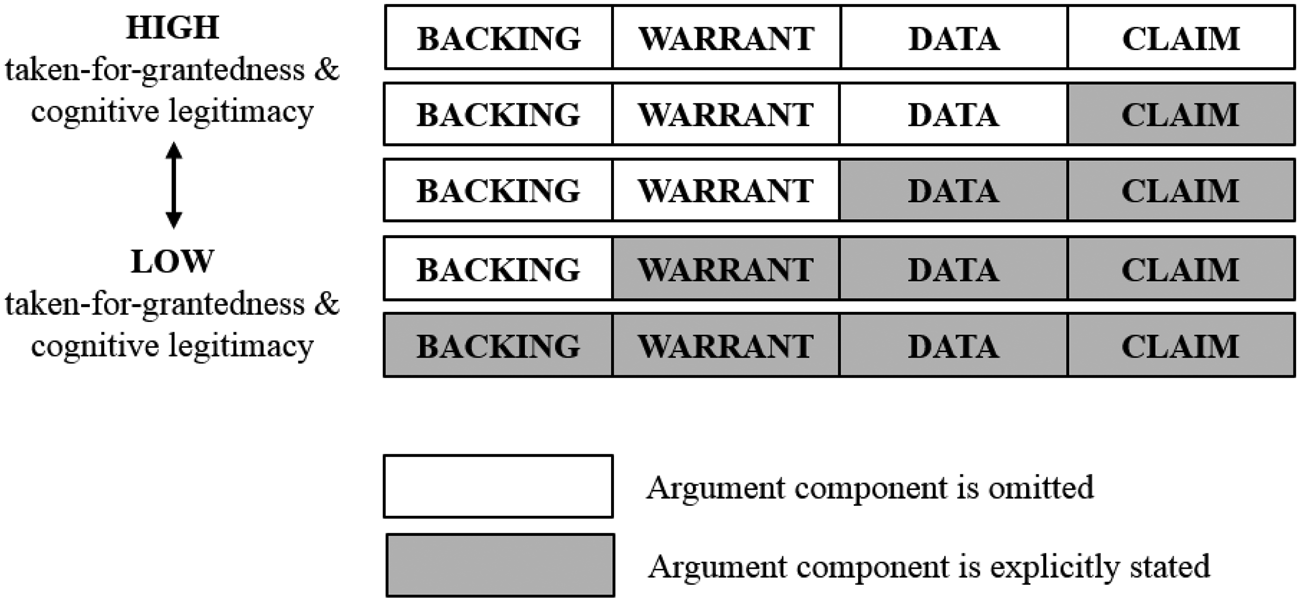
This chapter develops a theoretical framework connecting argumentation theory to institutional maintenance, showing how the structure of everyday arguments both reflects and reproduces the taken-for-granted assumptions that underpin institutions.
Key Insights
- The structure of everyday arguments both reflects and reproduces the taken-for-granted assumptions that constitute the cognitive foundations of institutions
- Argumentation theory offers a microfoundational account of how communication and discourse sustain institutional arrangements
Abstract
This chapter explores the relationship between argumentation and institutions. Drawing on argumentation theory, I develop a framework for understanding how the structure of arguments relates to the reproduction and maintenance of institutions. I argue that the mundane, everyday arguments that social actors make in institutional contexts both reflect and reproduce the taken-for-granted assumptions that constitute the cognitive foundations of institutions. In doing so, I advance a microfoundational account of institutional maintenance that highlights the role of communication and discourse in sustaining institutional arrangements.
Research in the Sociology of Organizations
Institutional Frame Switching: How Institutional Logics Shape Individual Action
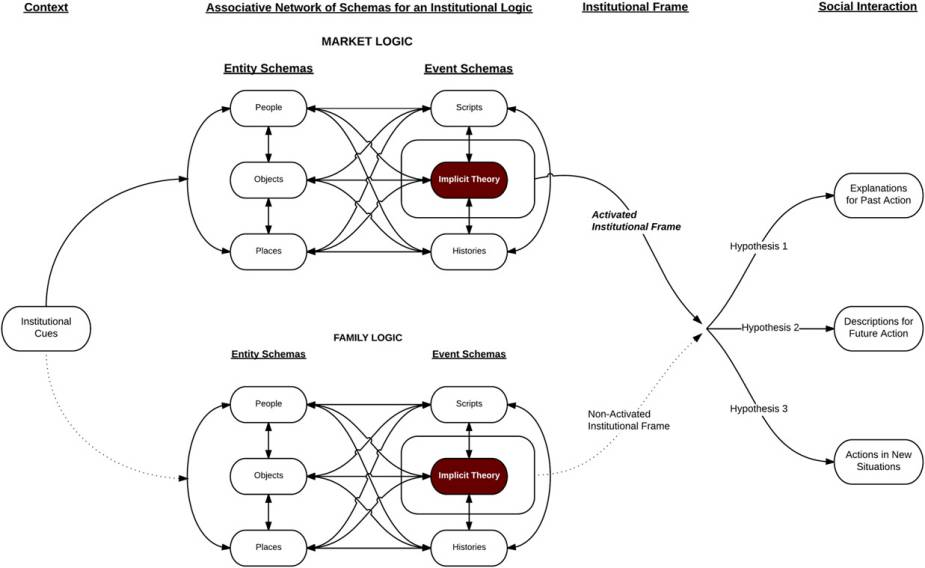
This study uses behavioral experiments to demonstrate that individuals can rapidly switch between institutional logics when primed, suggesting that competing logics coexist as cognitive frames that can be selectively activated to guide action.
Key Insights
- Individuals can rapidly switch between institutional logics in response to situational cues, a process termed “institutional frame switching”
- Priming different institutional logics affects subsequent judgments and decisions, suggesting logics operate as cognitive frames that can be selectively activated
Abstract
Research on institutional logics has highlighted that individuals in contemporary society are exposed to multiple, often competing, parsing institutional logics. Yet we know relatively little about how individuals navigate these logics in their day-to-day lives. In this chapter, we draw on research in cognitive psychology to develop and test the concept of institutional frame switching—the idea that individuals can rapidly shift between institutional logics in response to situational cues. Using a series of experiments, we demonstrate that priming individuals with different institutional logics affects their subsequent judgments and decisions, suggesting that logics operate as cognitive frames that can be selectively activated.
Doctoral Dissertation, University of Southern California
The Structure of Strategic Communication: Theory, Measurement, and Effects
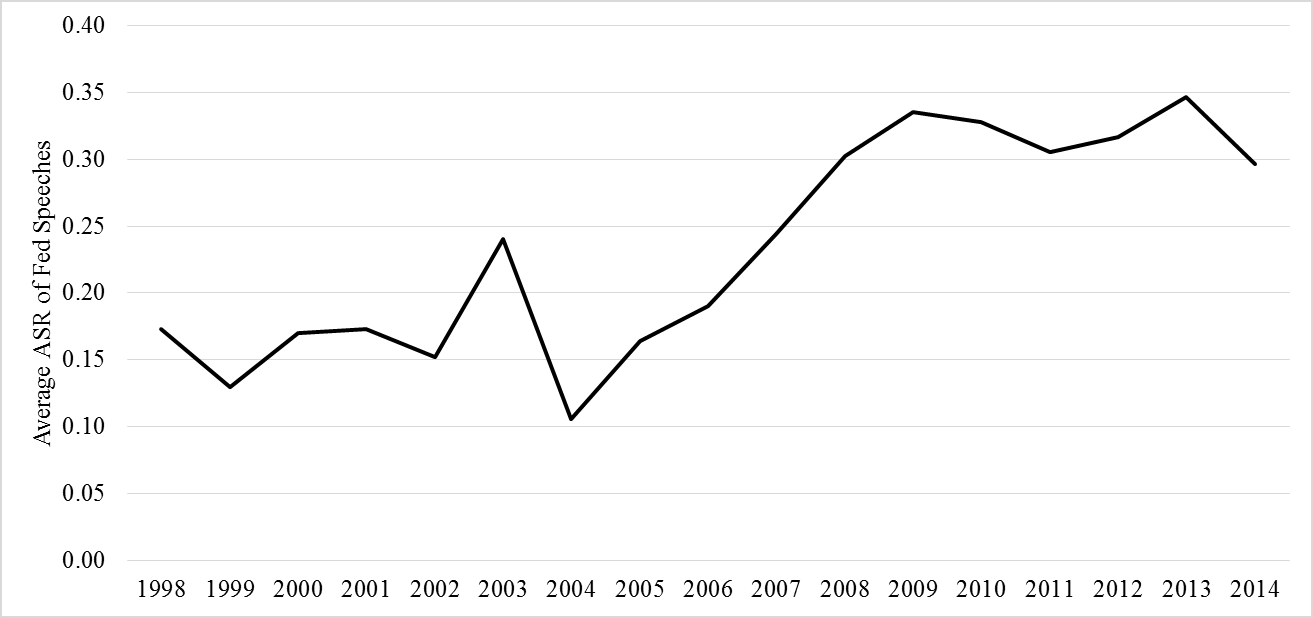
This dissertation develops a novel approach to studying the structure of strategic communication, introducing a new measurement called the argument structure ratio (ASR) and demonstrating its effects using all public speeches made by the Chair of the U.S. Federal Reserve from 1998 to 2014.
Key Contributions
- Develops the argument structure ratio (ASR), a new measurement that captures how explicitly a speaker makes taken-for-granted assumptions in their communication
- Outlines a three-step methodology for measuring the ASR of any collection of written texts
- Demonstrates that the more Fed speeches expose the assumptions underlying the Federal Reserve System, the more they produce market uncertainty
Abstract
This dissertation advances a novel approach that I refer to as the structure of strategic communication. Leveraging theory on how people naturally structure their arguments, this approach contends that organizational actors deploy arguments to influence others at two structurally distinct levels—within the rules of the game or about the rules of the game. This dissertation’s primary claim is that talking more about the rules of the game, which exposes the assumptions underlying our social institutions to direct examination, may have profound implications. I build evidence for this claim in two ways. First, I develop a new measurement called the argument structure ratio (ASR) that conceptually and empirically captures how explicit a speaker makes these assumptions in their communication. Second, I theorize and empirically demonstrate how the ASR impacts an audience’s reaction. Using all public speeches made by the Chairperson of the United States Federal Reserve from 1998 to 2014, I show that the more they expose the assumptions underlying the Federal Reserve System, the more their speeches produce market uncertainty.

Under review at Academy of Management Journal
Networks of Meaning: Advancing Semantic Network Analysis for Organizational Scholarship
This paper develops semantic network analysis (SemNA) into a systematic framework for organizational scholarship, distinguishing explicit usage networks (from word co-occurrence) from latent meaning networks (from word embeddings) and translating established network measures into the semantic domain. An empirical illustration measuring implicit gender bias in corporate earnings calls demonstrates the framework, which is released as an open-source Python package (semna).
Key Findings
- Distinguishes two types of semantic networks—explicit usage networks (words actors observably use together) and latent meaning networks (inferred from word embeddings)—capturing meaning as both rhetorical enactment and latent cognitive structure
- Translates established network measures—from the bridging of distant domains to message cohesion and core–periphery structure—into the semantic domain, moving analysis from descriptive visualization to rigorous structural measurement
- Applied to corporate earnings calls, both network types expose implicit gender bias as enacted in communication and embedded in latent meaning—a layered structure existing NLP methods cannot recover
Abstract
Meaning is relational, residing not in individual concepts but in how they connect to one another. To measure meaning in text, organizational scholars increasingly use natural language processing (NLP) methods, but most methods capture how concepts relate in pairs, not how those relations are organized into a larger structure. Semantic network analysis (SemNA), an established method in cognitive science and communication, recovers this structure by representing text as a network of concepts and ties. We develop SemNA into a systematic framework that lets organizational scholars formulate and test the structural claims about meaning their theories rest on but that existing methods leave beyond reach. It does so through two innovations. First, it distinguishes between explicit usage networks (built from words actors observably use together) and latent meaning networks (inferred from distributional similarity in embeddings). Second, it translates established network measures into the semantic domain. Applying the framework to implicit gender bias in corporate earnings calls, we show how both network types expose bias as enacted in communication and embedded in latent meaning, a layered structure existing NLP methods cannot recover. We close by discussing how SemNA yields testable hypotheses about the structure of meaning across organizational settings.
Social Deviance
Why does organizational misconduct persist, and what happens when social norms are violated? This stream investigates how misconduct spreads across individuals and generations, and how violations of trust, fairness, and justice shape perceptions and behavior.
Management Science
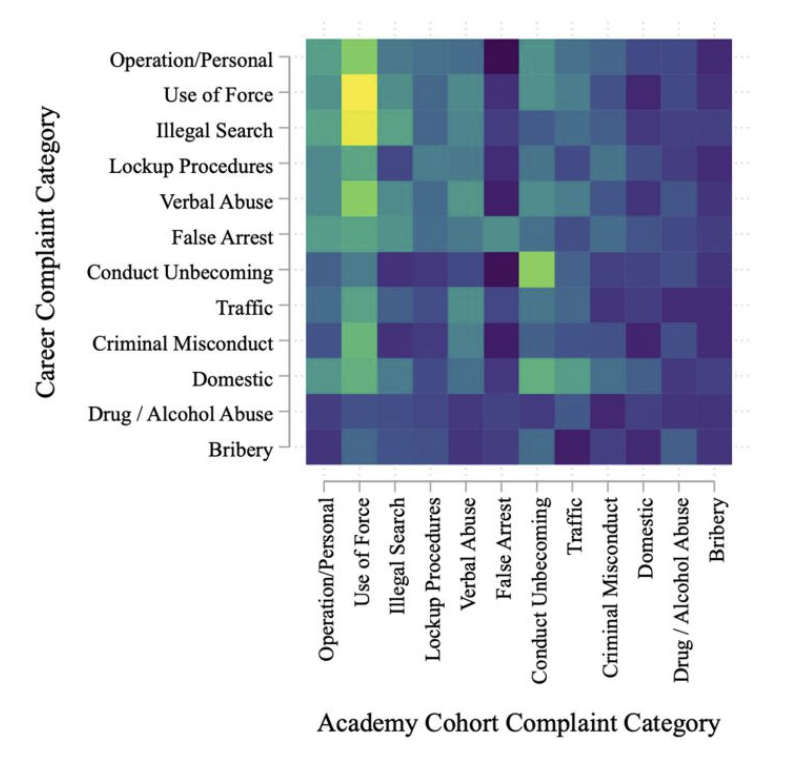
Intergenerational Transmission of Organizational Misconduct: Evidence from the Chicago Police Department
This study uses longitudinal administrative data from the Chicago Police Department spanning 1980 to 2017, exploiting a natural lottery that randomly assigns police recruits to training cohorts to identify the causal effect of early exposure to misconduct on an officer’s entire career trajectory.
Key Findings
- Officers randomly assigned to training cohorts with higher rates of misconduct engage in significantly more misconduct over their entire careers
- When these officers become managers, they pass misconduct on to their subordinates—revealing an intergenerational transmission mechanism
- The transmission effect is strongest for subordinates who were themselves exposed to misconduct early on, are earlier in their tenure, and have not yet received an annual review
Abstract
This paper investigates how organizational misconduct is perpetuated through intergenerational transmission. We theorize that early exposure to a subculture of misconduct imprints newcomers with the belief that misconduct is normal, which is then carried by these individuals into managerial positions and passed down to their subordinates. We test this using longitudinal administrative data from the Chicago Police Department from 1980 to 2017. We exploit a lottery that assigns applicants to training cohorts to demonstrate that officers exposed early on to a subculture of misconduct not only engage in more misconduct over their entire careers, but also increase the misconduct of their subordinates after they become managers.
Organizational Behavior and Human Decision Processes
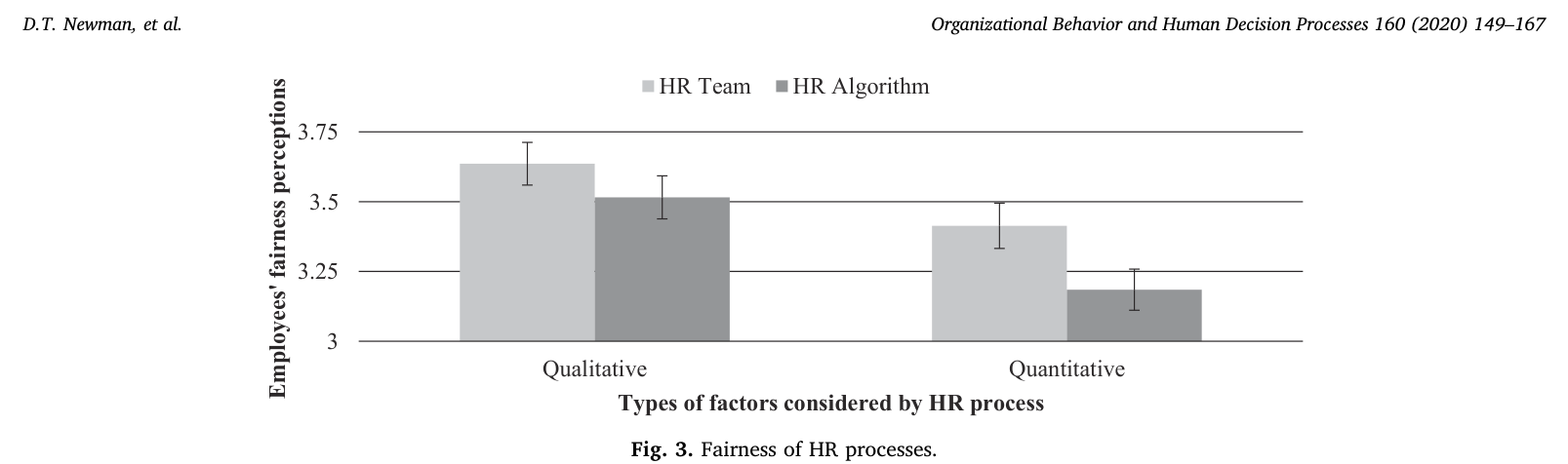
When Eliminating Bias Isn’t Fair: Algorithmic Reductionism and Procedural Justice in Human Resource Decisions
This study uses four laboratory experiments (N = 798) and a large-scale randomized field experiment in an organizational setting (N = 1,654) to test whether eliminating human bias through HR algorithms actually improves perceptions of procedural fairness.
Key Findings
- Even when algorithms eliminate bias, people perceive algorithmic HR decisions as less fair than identical decisions made by humans
- People view algorithms as reductionistic—believing they overlook important qualitative and contextual information
- This perceived reductionism undermines beliefs about procedural fairness, even when the decisions themselves are objectively better
Abstract
The perceived fairness of decision-making procedures is a key concern for organizations, particularly when evaluating employees and determining personnel outcomes. Algorithms have created opportunities for increasing fairness by overcoming biases commonly displayed by human decision makers. However, while HR algorithms may remove human bias in decision making, we argue that those being evaluated may perceive the process as reductionistic, leading them to think that certain qualitative information or contextualization is not being taken into account. We argue that this can undermine their beliefs about the procedural fairness of using HR algorithms to evaluate performance by promoting the assumption that decisions made by algorithms are based on less accurate information than identical decisions made by humans. Results from four laboratory experiments (N = 798) and a large-scale randomized experiment in an organizational setting (N = 1654) confirm this hypothesis.

Strategic Management Journal
Breaking the Letter vs. Spirit of the Law: How the Interpretation of Contract Violations Affects Trust and the Management of Relationships
This study uses two experimental studies to investigate how people interpret contract violations differently depending on whether the letter or the spirit of the contract was violated, and how these interpretations shape trust and relationship management.
Key Findings
- Violating the letter of a contract is far harder to recover from than violating its spirit
- The difference is driven by perceived intentionality—letter violations signal deliberate intent
- These effects generalize across different populations, levels of contracting experience, types of contexts, and degrees of contract complexity
Abstract
Contract violations are ubiquitous. There has been little attention, however, dedicated to understanding the mechanisms involved in making sense of and addressing such occurrences. Two experimental studies investigated how people interpret contract violations and how these interpretations affect trust and the management of relationships. By drawing on the distinction between violations of the letter versus spirit of the law, we show that letter violations are more difficult to overcome than spirit violations, due to higher perceived intentionality. These effects generalized across different populations, levels of contracting experience, types of contracting contexts, levels of ambiguity within the contract, and degrees of contract complexity.
Journal of Experimental Psychology: Applied
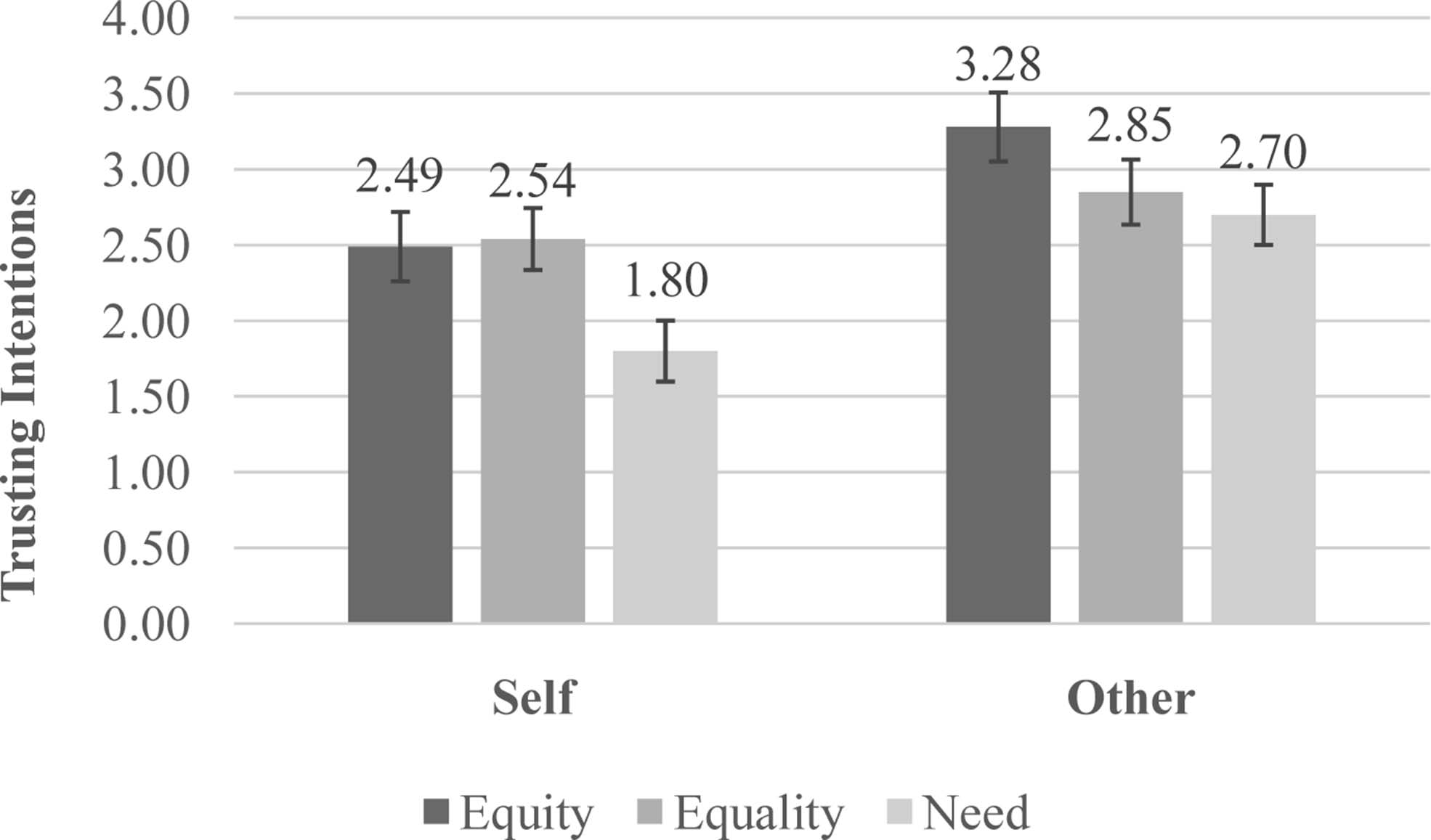
Justifying One’s Transgressions: How Rationalizations Based on Equity, Equality, and Need Affect Trust After its Violation
This study uses two experiments with a novel research design that supplements the rigor of laboratory methods with far greater realism to examine how different types of justifications—based on equity, equality, and need—affect trust after an integrity-based violation.
Key Findings
- Combining a justification with an apology generally elicits higher trust than an apology alone, but this depends on the intended beneficiary of the violation
- Equity-based justifications are more effective at restoring trust than equality- or need-based justifications
- Need-based justifications are particularly harmful when the violation benefited the self rather than another party
Abstract
We investigate how efforts to justify a transgression as an attempt to address matters of equity, equality, or need would affect the implications of an apology for trust after its violation, and how this would depend on the intended beneficiary. To do so, we conducted 2 studies, including a new research design that supplements the rigor of experiments with far greater realism. Although combining a justification with an apology tended to elicit higher trust relative to an apology alone when the violation benefited another party, doing so was ineffective or harmful when the violation benefited the violator.
Research on Managing Groups and Teams
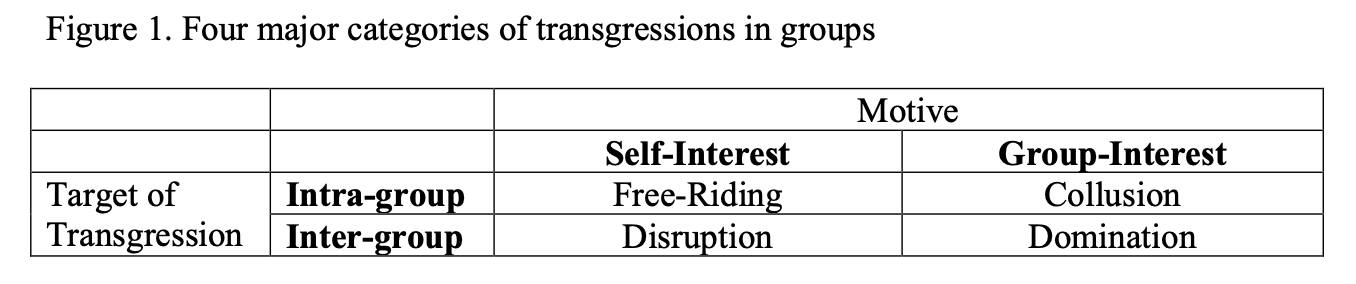
The Nature of Collective Reactions to Potential Transgressions
This chapter draws on the ethics, fairness, and justice literatures to develop a framework for understanding how reactions to transgressions differ at the collective level compared to individual reactions—an important but largely unexamined question.
Key Insights
- Attributions for transgressions in group contexts differ systematically from those at the individual level
- Collective reactions to transgressions may ultimately diverge from individual reactions due to group dynamics
- The chapter identifies critical gaps in the literature and provides a roadmap for future research on group-level responses to wrongdoing
Abstract
To motivate efforts within the ethics, fairness, and justice literatures to address some largely unexamined questions regarding how reactions to potential transgressions might depend on the group context. Through a review of the prior literature, we highlight the relative lack of research on such responses, particularly at a collective level, by considering the types and implications of attributions made for transgressions in a group context and how collective reactions to potential transgressions may ultimately differ from those of individuals.
2nd round R&R at Administrative Science Quarterly
Punishment Without Deterrence: Moral Gray Zones and Peer Misconduct in the Chicago Police Department
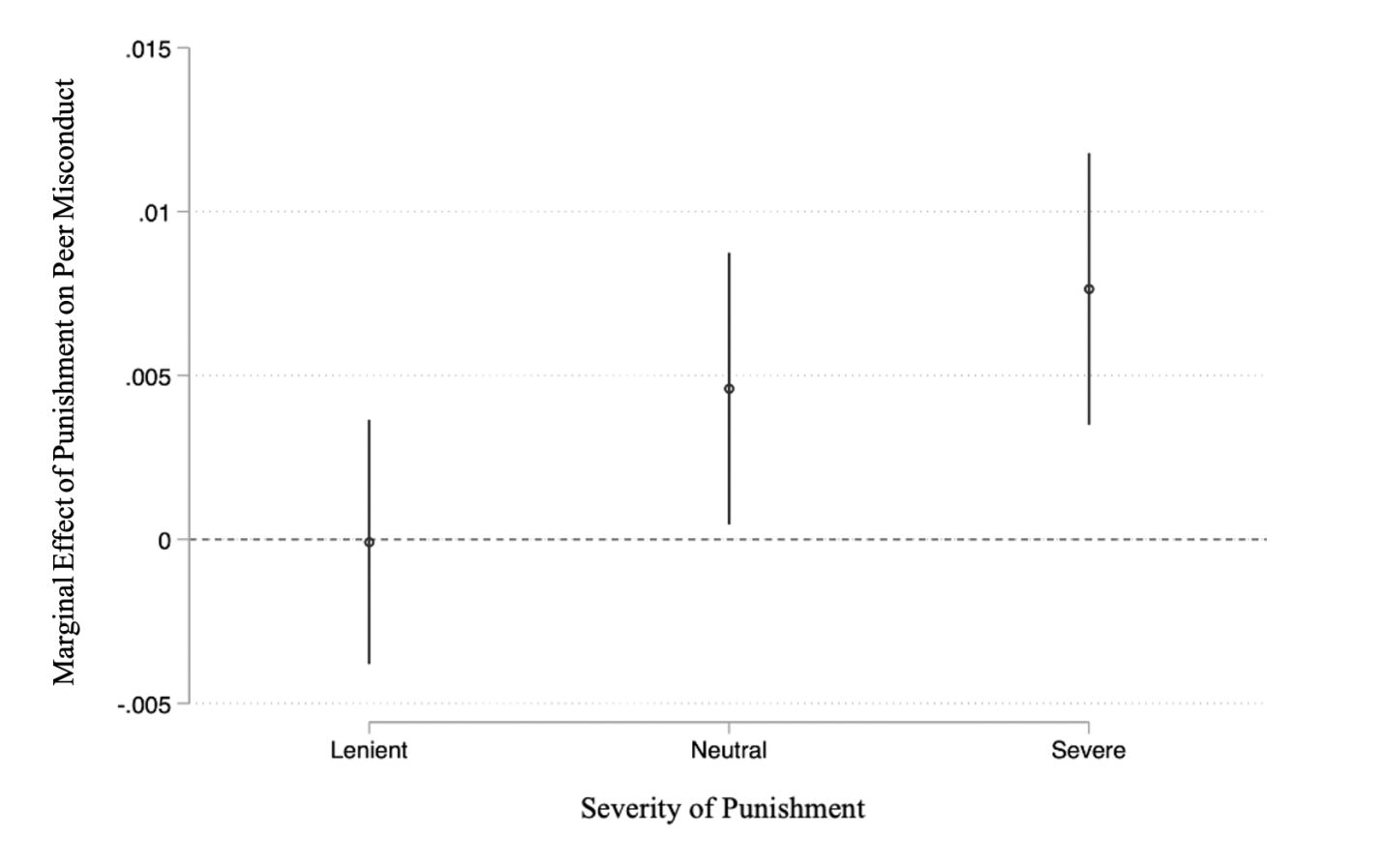
This study uses longitudinal data on all misconduct and punishments within the Chicago Police Department between 1980 and 2017 to test whether punishment deters misconduct in settings where the line between acceptable and unacceptable behavior is unclear.
Key Findings
- After the CPD punishes an offending officer, misconduct increases among their peers rather than decreasing
- More severe punishment amplifies subsequent misconduct—the opposite of what deterrence theory predicts
- In “moral gray zones” where behaviors are technically prohibited but implicitly tolerated, punishment is perceived as unjust and ultimately backfires
Abstract
Police misconduct is a prevalent problem in the United States, and many have called for more punishment to address it. This idea aligns with longstanding sociological theory suggesting that punishment functions as a widespread deterrent by making clear the costs of certain behaviors. However, we argue that this logic only holds when the threat of punishment is clear and predictable, and many settings lack this clarity. In this paper, we investigate the Chicago Police Department (CPD), whose historical reluctance to consistently punish misconduct places its police officers in a moral gray zone: certain behaviors are technically prohibited but are, in practice, implicitly tolerated. We theorize that in such contexts, punishment will be seen as unjust and ultimately backfire, producing more misconduct.
Entrepreneurship in Nascent Markets
How do entrepreneurs build legitimacy and attract resources in markets that don’t yet have clear rules? This stream explores how founders use language and framing to navigate uncertainty, shape audience perceptions, and establish new market categories.
Journal of Management Studies
Entrepreneurial Market Leadership Claims, Cultural Resonance, and Investor Evaluations in Nascent Markets: The Goldilocks Effect
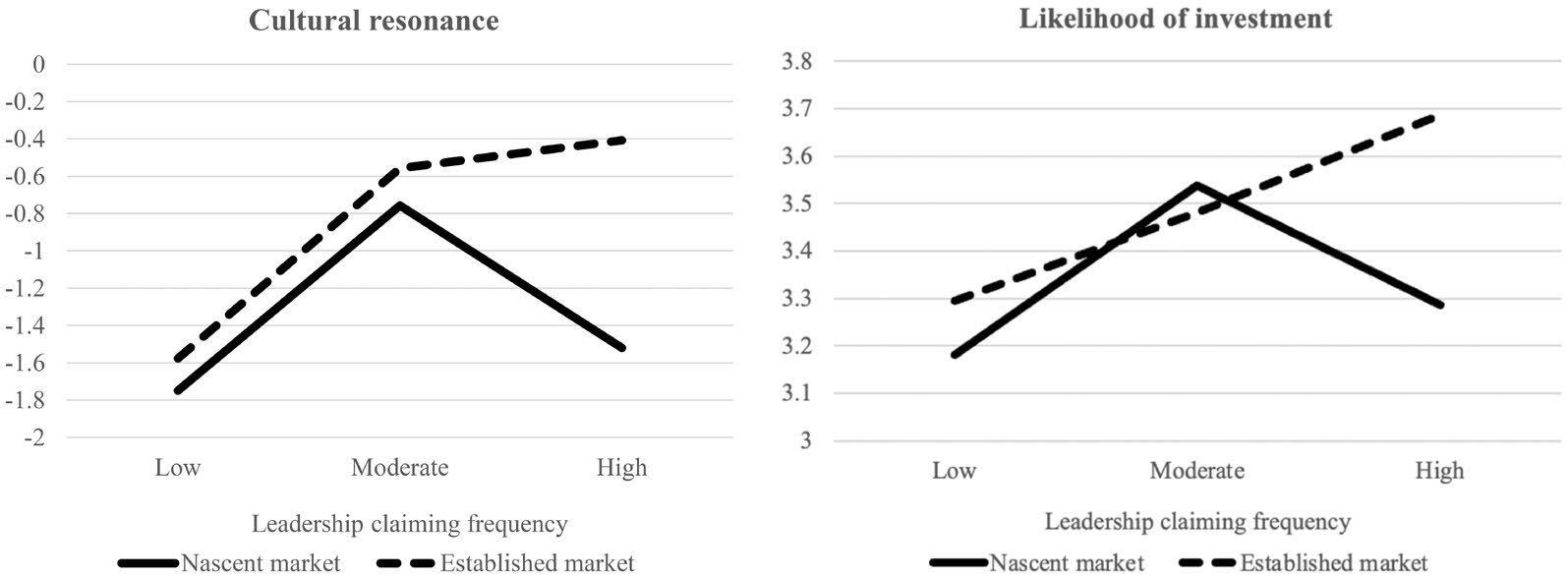
This study uses a multimethod approach—combining archival data on entrepreneurial ventures in nascent markets with a controlled experiment—to examine how the frequency of market leadership claims affects cultural resonance and investor evaluations.
Key Findings
- Market leadership claims follow a “Goldilocks effect”—moderate claiming frequency enhances resonance with investors, but excessive claims reduce it
- The mechanism works through cultural resonance: claims must trigger cognitive processing without overwhelming it
- Both archival and experimental evidence converge on the same curvilinear relationship between claiming frequency and investor evaluations
Abstract
Cultural entrepreneurship research emphasizes entrepreneurs’ use of cultural resources to influence audience evaluations through resonance. However, the process by which such cultural resonance is achieved remains underexplored, particularly as an intermediary outcome. We investigate how cultural resonance may be attained by focusing on entrepreneurs’ use of a prevalent cultural resource in nascent markets: market leadership claims. Incorporating insights from social psychological research, we propose that the frequency of these claims becomes an important prompt in triggering investors’ cognitive processing and affects the attainment of cultural resonance. Specifically, we theorize a ‘Goldilocks effect’: a venture’s increased claiming frequency initially enhances resonance with investors, resulting in more favourable evaluations, but excessive claims reduce it, resulting in less favourable evaluations.
Strategy Science
Communication under Uncertainty and the Role of Founders’ Information Advantage: Evidence from SPAC IPOs
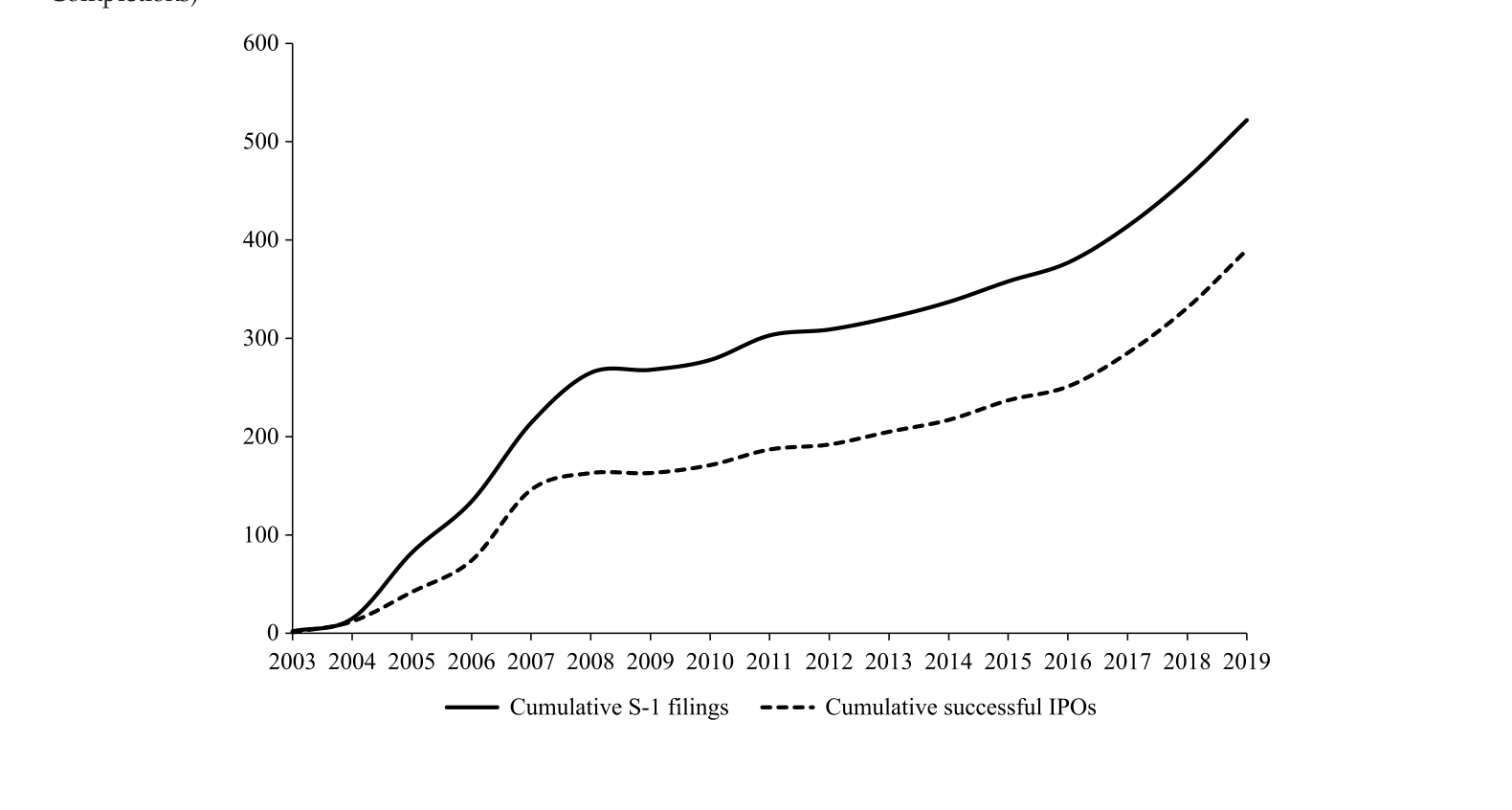
This study analyzes the full population of special purpose acquisition companies (SPACs) that sought to complete an IPO from the emergence of the sector in 2003 through 2019, using computational text analysis to measure how founders communicate under different types of uncertainty.
Key Findings
- When founders have a knowledge advantage over investors (information asymmetry), expressing less uncertainty leads to better financing outcomes
- When uncertainty is fundamental and nobody has an advantage (Knightian uncertainty), founders who openly express more uncertainty achieve better outcomes
- The key is matching communication strategy to the type of uncertainty—projecting confidence backfires when nobody truly knows
Abstract
This study develops a novel framework about how a firm’s financing outcome will be shaped by its communication under different types of uncertainty. Whereas prior work has largely focused on uncertainties that arise because of founders having a knowledge advantage over investors, we examine a firm’s communication in situations of more fundamental uncertainty when both founders and investors face knowledge problems. Our framework proposes that in situations where founders have a knowledge advantage over investors (i.e., when there is information asymmetry), firms that reduce uncertainty by sending signals of quality and express less uncertainty in their communications will enjoy better financing outcomes. However, we argue that in situations characterized by high unknowability, and where founders do not have a significant knowledge advantage over investors (i.e., when there is Knightian uncertainty), firms that acknowledge this unknowability by expressing more uncertainty in their communications will have more favorable financing outcomes.
Strategic Management Journal
Building a Bridge to the Future: Prospective Legitimation in Nascent Markets
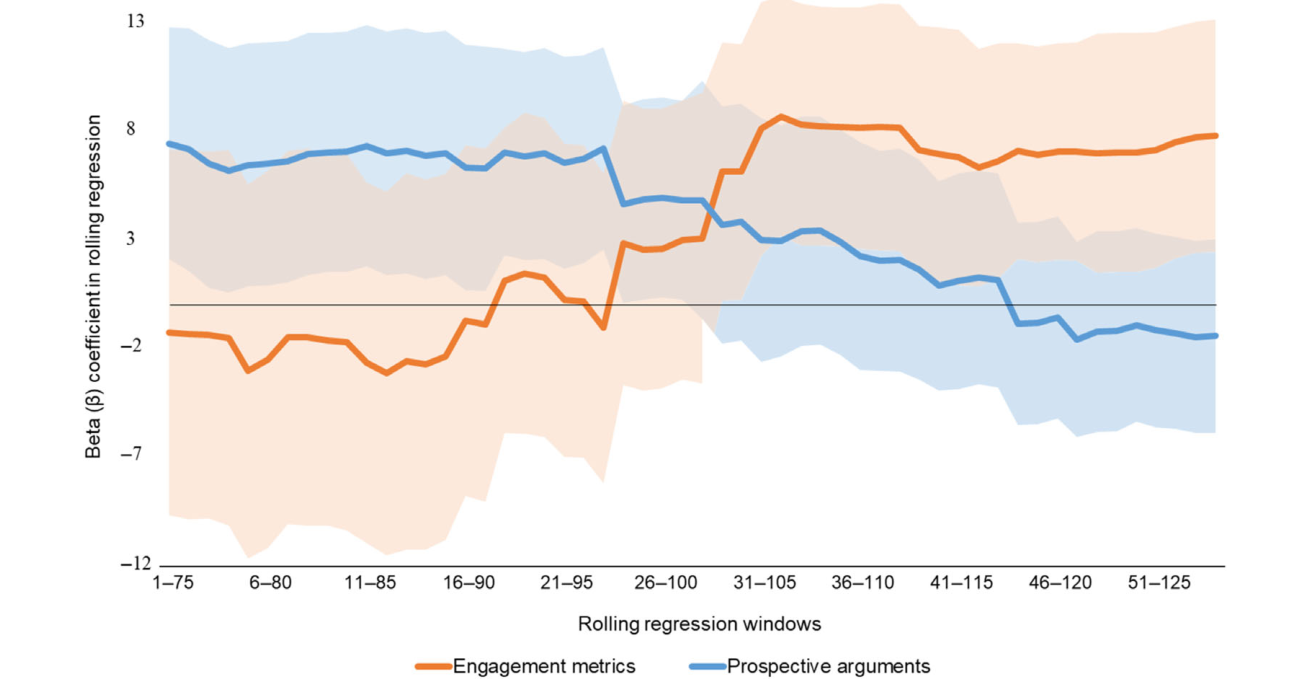
This study uses a question-driven mixed-methods approach—combining qualitative analysis of Internet firms’ communications during the dot-com boom of the 1990s with archival stock market data—to investigate how entirely new metrics like “page views” and “unique visitors” gained legitimacy with investors despite having no track record.
Key Findings
- New engagement metrics gained legitimacy not by being associated with already legitimate ideas, but through a novel process of “prospective legitimation”
- Firms constructed legitimacy by linking unproven new metrics to future profitability—building a bridge to a future that had not yet arrived
- Investors gradually accepted these metrics before any concrete evidence that they predicted actual financial performance
Abstract
How do new things in nascent markets become legitimate? Existing research points to a process where legitimacy is built by making associations with already legitimate ideas from other domains. In this study, however, we investigate the Internet boom of the 1990s, a nascent setting where something new—engagement metrics used to evaluate firms—gained legitimacy amongst investors, but not by being associated with already legitimate metrics. Using a question-driven mixed-methods approach, we reveal that these new metrics instead gained legitimacy through a novel process we term prospective legitimation, where a new basis of legitimacy was constructed by firms linking their otherwise unproven new metrics to future profitability.

2nd round R&R at Strategic Management Journal
Ambiguity in Entrepreneurial Pitches: A Semantic Network Approach
This study uses data from Product Hunt—an online platform where entrepreneurs pitch technology innovations—and develops a novel measure of lexical ambiguity using Word2Vec semantic networks to test whether ambiguity in entrepreneurial pitches helps or hurts audience support.
Key Findings
- Contrary to conventional wisdom, entrepreneurs who use more lexically ambiguous words mobilize more overall support for their ideas
- Lexical ambiguity is especially useful when trying to reach diverse audiences and when pitching highly novel ideas
- Ambiguous words open up multiple conceptual pathways, making it easier for different audience members to interpret the idea in their own familiar terms
Abstract
How should entrepreneurs pitch their novel ideas to mobilize audience support? Prevailing wisdom suggests that they should avoid ambiguity, which can obscure how their idea fits into existing categories and create uncertainty for audience members. However, entrepreneurial communication can introduce other forms of ambiguity that may be useful. In this study, we adopt a semantic network approach to investigate the potential benefits of lexical ambiguity, which occurs when the words used to describe an idea have multiple meanings. We theorize that lexical ambiguity opens up more conceptual pockets within the semantic network, thereby expanding the possible interpretations of an entrepreneur’s novel idea and making it easier for audience members to understand it in their own familiar terms.